
People analytics built for HR leaders, not data engineers.
One Model is built for enterprise data teams with weeks of data modeling ahead. HRBench gives HR leaders 45+ auto-calculated metrics, workforce benchmarks, and engagement surveys in under a week. No analysts required.
Trusted by HR leaders at:



.png)
Where One Model falls short for mid-market HR teams
How HRBench outperforms One Model
HRBench fills the gaps that matter most to mid-market HR teams. Built-in benchmarks, engagement surveys, and instant time to value. No data team required.
45+ auto-calculated HR metrics making your data instantly actionable.
One Model offers pre-defined metrics and the flexibility to create custom metrics. But unlocking that value requires data modeling, configuration, and analytics expertise. The platform's strength is giving data teams tools to build exactly what they need, but that takes time and technical skill.
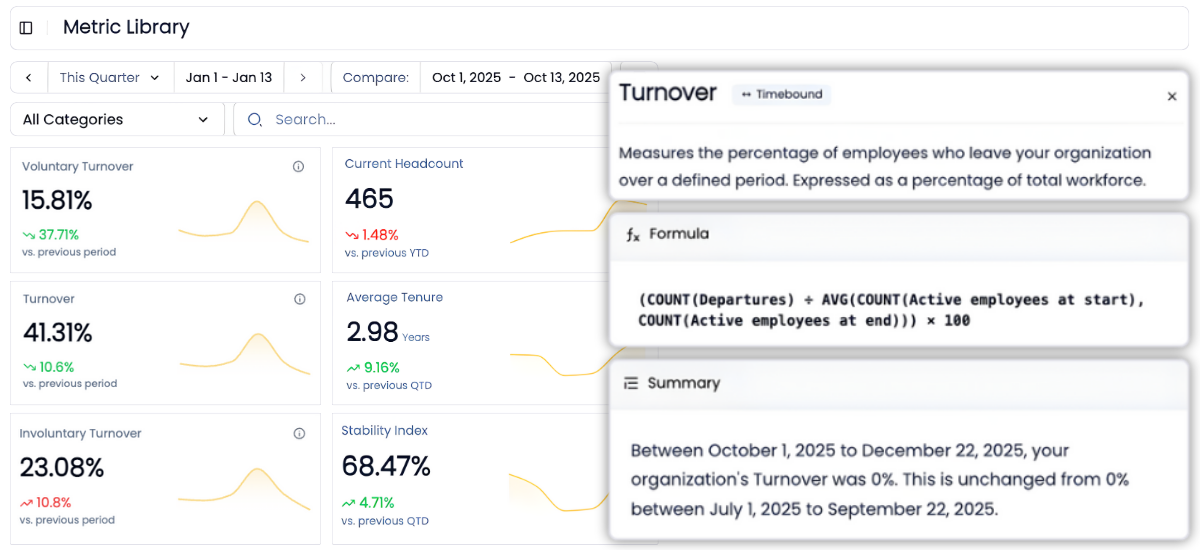
HRBench auto-calculates 45+ workforce metrics the moment your data connects. Headcount, turnover, span of control, revenue per employee, cost of turnover, retention rate. Every metric is drillable by department, role, gender, tenure, and more.
No data modeling. No report builder. Just answers.
Go from overview to drilling into every metric for insights in a few clicks
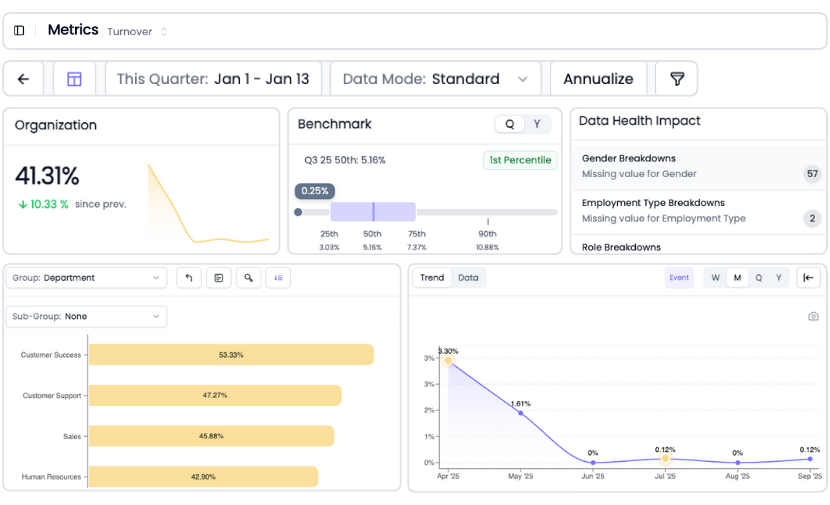
Every metric in HRBench is fully drillable.
Click into any tile to explore historical trends, department-level breakdowns, and benchmarks by industry, size, region, and more.
One Model's Data Stories offer interactive visualizations and narrative-driven analytics. They're powerful for data teams who can build and customize them. HRBench puts the drill-down one click away for any team member, not just your analytics specialists.
Industry benchmarks included with every metric so you know where you stand
When leadership asks "how do we compare?" you need an answer in the same view as your data, not in a separate spreadsheet sourced from an industry report.
HRBench embeds benchmarking against your industry, company size, and region inside every metric. Turnover at 4.92% against a 4.60% benchmark at the 55th percentile. Retention at 94.95% against 94.62% at the 54th percentile.
One Model does not include workforce benchmarking. The platform is built for deep internal analytics and predictive modeling. If your CHRO needs a benchmark comparison for the next board meeting, you'll need to find that data elsewhere.

Built-in data health monitoring, so you're confident with clean, validated data
You can't report what you can't trust.
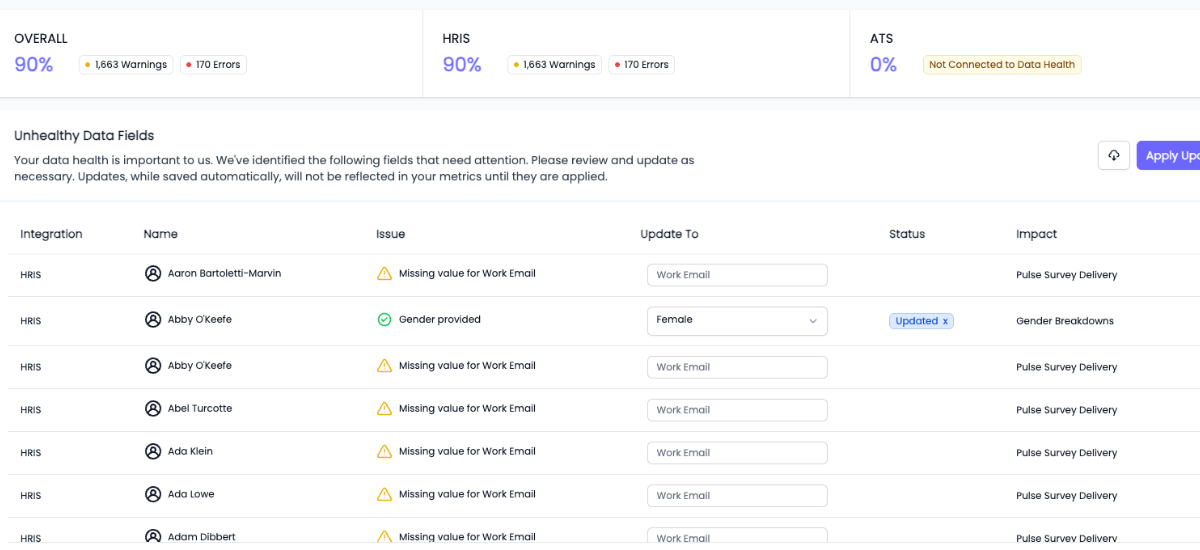
HRBench scans every metric for missing or incomplete data fields and highlights what needs attention, so your reports are always built on clean, complete data.
One Model provides automated data cleaning and modeling at ingestion, which helps standardize data flowing in from multiple systems. But if upstream data quality issues exist, they can surface when leadership questions the numbers. HRBench catches data gaps before they reach a dashboard.
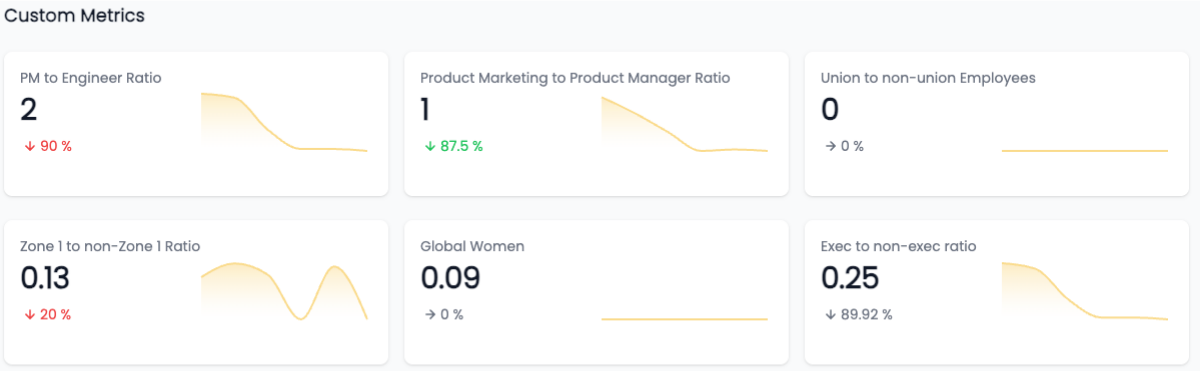
Custom metrics, no SQL required
Need to track something unique to your business?
We support fully custom metrics, built by our team, shown alongside our 45+ standard metrics, and filterable just like the rest.
One Model offers deep self-service metric creation for technical users. If you have a data team that wants full control over metric definitions and data models, One Model provides that flexibility. HRBench takes the opposite approach: tell us what you need, and we build it for you. No data modeling. No query language. Just answers.
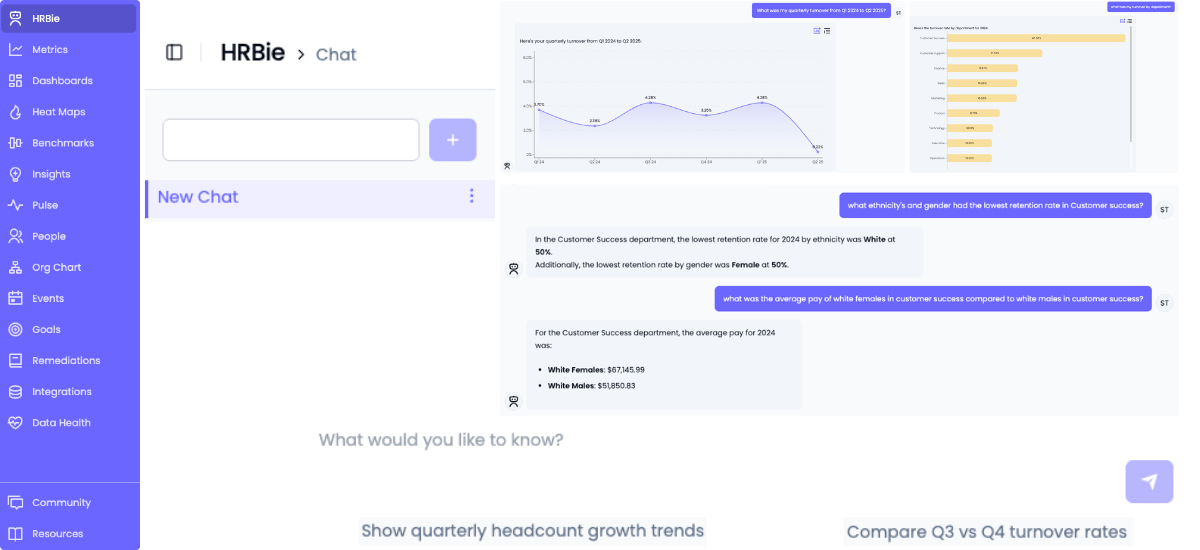
AI-powered workforce answers, built for your team
Both HRBench and One Model offer AI assistants for natural language workforce queries.
One Model's One AI Assistant lets users ask questions about their workforce data in plain English and get AI-generated insights. The platform's emphasis on transparent AI means you can understand how predictions are made. It earned AI Breakthrough's 2025 Ethical AI Solution of the Year for good reason.
The catch: One AI Assistant is only available in the Enterprise tier.
HRBie is HRBench's AI assistant built for mid-market HR teams. Ask natural language questions and get instant answers, visualizations, and trend analysis. No query builder or technical knowledge needed.
The difference: HRBie is included for every HRBench customer and works the moment your data connects. One AI Assistant requires the Enterprise subscription and a fully modeled data environment to deliver its full value.
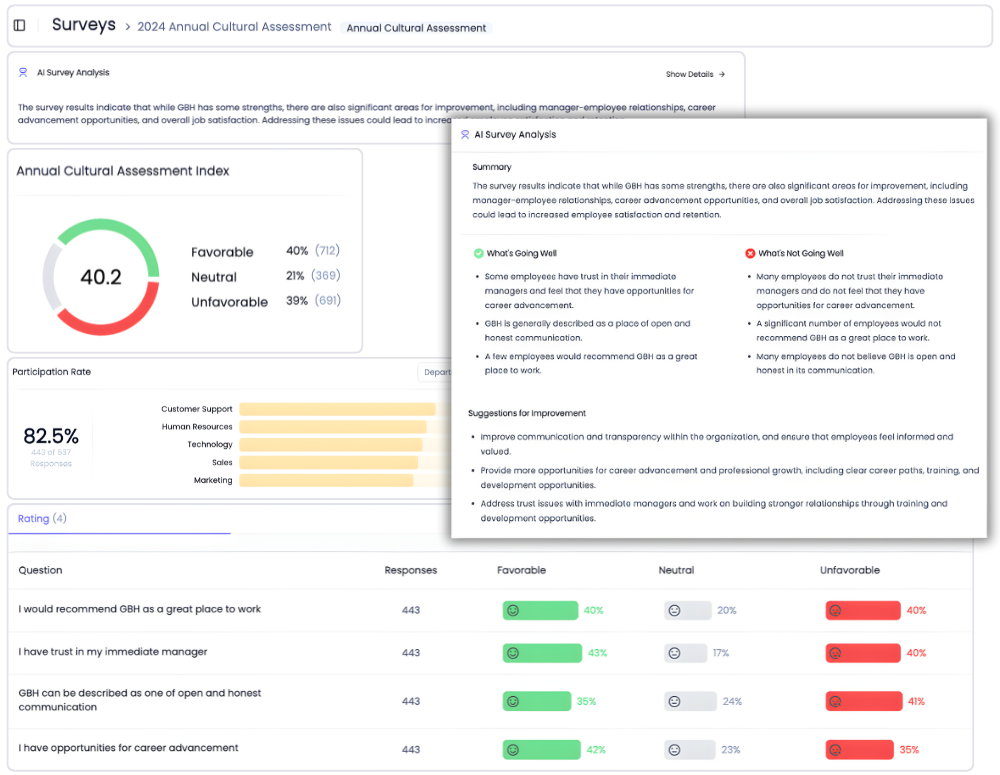
Engagement surveys included, not sold separately
One Model does not include native survey tools. To correlate engagement data with turnover, retention, and workforce metrics, you need a separate vendor like Qualtrics, an integration project, and ongoing maintenance to keep systems in sync. G2 reviewers have noted that the Qualtrics integration is still being developed.
HRBench includes eNPS, pulse surveys, full engagement surveys, and exit interviews for every customer. Survey data flows directly into your analytics dashboards, so you can see the connection between engagement scores and workforce outcomes without a separate tool or integration project.
One platform. One view. Engagement and analytics together.
Why HR teams chose HRBench over enterprise analytics platforms
Most HR teams spend weeks pulling reports, cleaning spreadsheets, and stitching together dashboards across systems.
HRBench Analytics eliminates the manual work, so you can focus on driving action.
The conversations have changed from, ‘Here’s the data,’ to ‘I see the trend and the root cause.
.png)
Of my vendors, HRBench is the top of my list. We held onto trailing data from our prior system and integrated it seamlessly. Our team had to do zero lift.

“HRBench gave us confidence. We weren’t spending hours building dashboards anymore. We could focus on strategy, not reporting.”
.jpg)
Frequently Asked Questions
Common questions from HR teams comparing One Model and HRBench.
It depends on your needs. One Model excels as a flexible, customizable analytics platform for large enterprises with dedicated people analytics or data teams. If your organization needs deep data modeling, transparent AI, and the ability to configure every aspect of your analytics environment, One Model is a strong choice. HRBench is built for mid-market HR teams at PE-backed and growth-stage companies who need trusted analytics without hiring a people analytics specialist. If your priority is fast time to value, included benchmarks and surveys, and a platform your HR team can use on day one, HRBench is the better fit.
Yes. HRBench integrates with 90+ HRIS and ATS platforms through pre-built APIs, including Workday, UKG, BambooHR, ADP, Paylocity, and more. Data syncs automatically on a daily basis. One Model also offers broad integration capabilities with systems like Workday, SAP SuccessFactors, Greenhouse, and Oracle. One Model's strength is combining HR data with non-HR sources for advanced cross-functional analysis, though this typically requires data modeling expertise.
One Model uses per-employee pricing with annual fees. Reviewers have noted recent price increases that make it comparable to premium platforms like Visier. Predictive analytics and AI Assistant capabilities are limited to the Enterprise tier. Costs scale with your employee count. HRBench offers transparent mid-market pricing with engagement surveys, benchmarks, predictive analytics, and org charts included for every customer. No tier gates. No separate SKUs for core analytics features.
Yes. HRBench forecasts 25+ workforce metrics including departures, turnover, new hire turnover, retention rate, span of control, and headcount growth. You can forecast 3 to 6 months out and sort by positive, negative, or neutral impact. One Model's One AI offers strong predictive capabilities with transparent, no-code model building. However, predictive analytics are limited to the Enterprise tier. HRBench includes predictions for every customer from day one.
No. One Model focuses on analytics and does not include native survey tools. To correlate engagement with workforce metrics, you need a separate vendor like Qualtrics and a data integration project. Reviewers have noted the Qualtrics integration is still being developed. HRBench includes eNPS, pulse surveys, full engagement surveys, and exit interviews for every customer. Engagement data flows directly into your analytics dashboards.
No. One Model focuses on internal analytics, predictive modeling, and cross-system data unification. External workforce benchmarking is not a built-in feature. HRBench includes industry, company size, and regional benchmarks for every metric, for every customer, from day one. When leadership asks how you compare to your peers, the answer is already in your dashboard.
HRBench customers go live in under 7 days. Some have launched in as little as 24 hours. Your data connects, metrics auto-calculate, and benchmarks populate immediately. One Model claims enterprise-scale implementation in weeks. The timeline depends on data complexity, the number of source systems, and your selected tier. G2 reviewers noted onboarding challenges for some organizations, particularly with multiple data sources.
One Model's strengths are real and worth acknowledging. The platform offers deeper customization and data modeling flexibility than HRBench. One AI's transparent approach to predictive analytics is industry-recognized. If your organization has a dedicated people analytics team and needs to combine HR data with non-HR sources like financial or operational data in a highly configurable environment, One Model provides that depth. HRBench intentionally trades deep customization for immediate time to value. If you need analytics now, with benchmarks, surveys, and predictions included, HRBench is the faster path.
One Model is best for large enterprises with 1,000+ employees, dedicated people analytics or data teams, and complex multi-system HR environments. If you need transparent AI-powered predictions, deep data modeling, and the flexibility to configure your analytics platform to your exact specifications, One Model delivers.
HRBench is built for mid-market and PE-backed companies with 500 to 5,000 employees who need trusted workforce analytics without hiring a dedicated analytics team. If you want auto-calculated metrics, included benchmarks, engagement surveys, and predictive analytics, live in under a week, HRBench is the right fit.
See your workforce data in 20 minutes
Book a personalized walkthrough and get a custom benchmark report built from your own headcount, turnover, and cost data. You'll leave the call knowing exactly what HRBench can surface from your HRIS, ATS, and engagement systems.
- A live walkthrough mapped to your company size, industry, and systems
- A custom benchmark report comparing your metrics to peer companies
- A clear view of what an HRBench rollout would look like for your team