
Employee engagement surveys integrated with your people data
HRBench employee surveys let you collect, analyze, and act on employee feedback directly alongside your workforce metrics and dashboards.
Schedule demo
Trusted by HR leaders at:




.png)
Launch surveys faster with ready-to-use templates
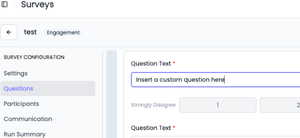
HRBench includes a growing library of pre-built survey templates and question sets—designed to help you quickly deploy common engagement, pulse, and lifecycle surveys.
Use them as-is, or customize to match your voice, objectives, or delivery channel.
You never have to start from scratch.
 Schedule a demo
Build custom surveys that fit your workforce needs
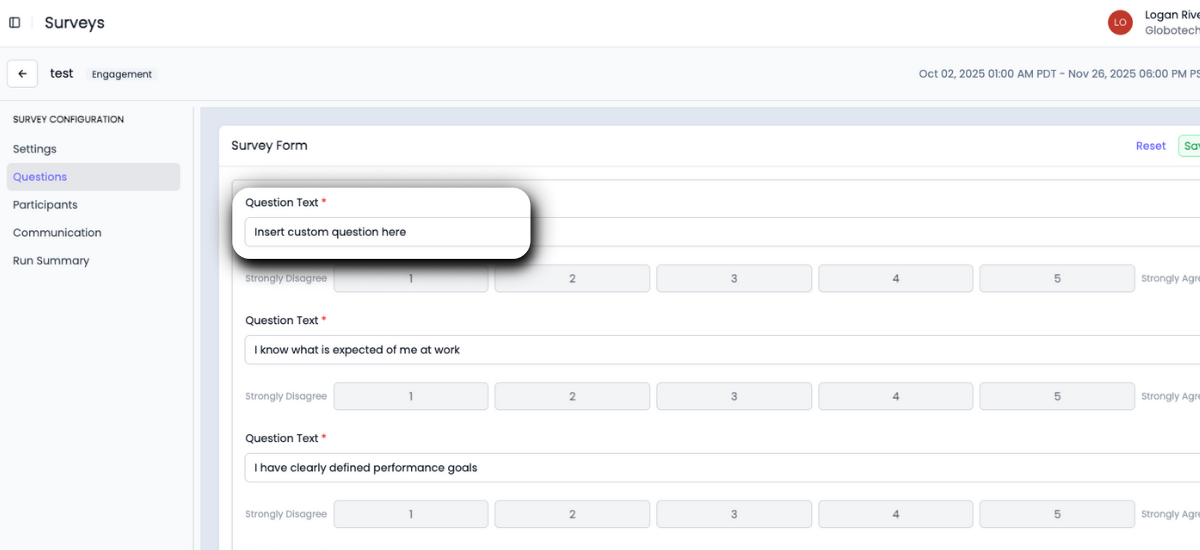
Every company is different. That’s why HRBench lets you build fully custom engagement surveys—no rigid templates or limited question sets.
Control the language, structure, timing, and frequency. Whether it’s a quarterly pulse or a deep-dive on culture, you’ll get the data that matters to your organization.
 Schedule a demo
Track employee sentiment over time from ongoing survey results
Spot issues before they escalate.
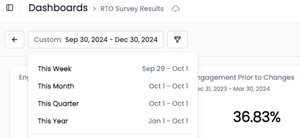
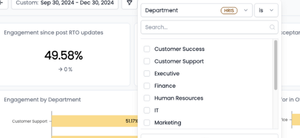
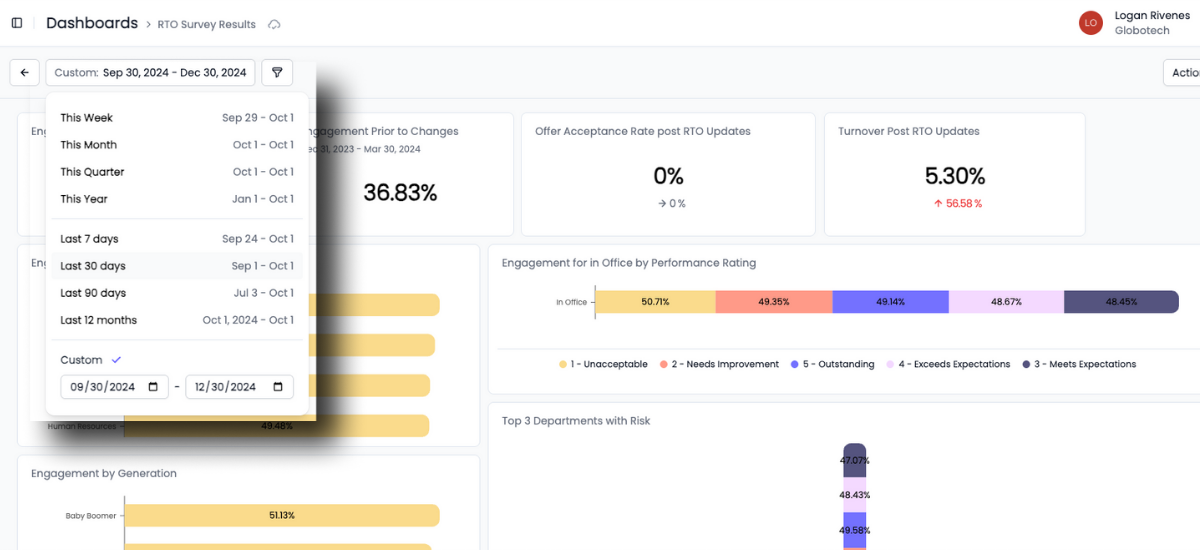
HRBench Engagement Surveys track sentiment trends over time and allow you to filter by team, tenure, location, role, and more.
Understand how engagement changes across the employee lifecycle—and how it connects to turnover, burnout, or performance.
 Schedule a demo
Give every manager access to employee feedback
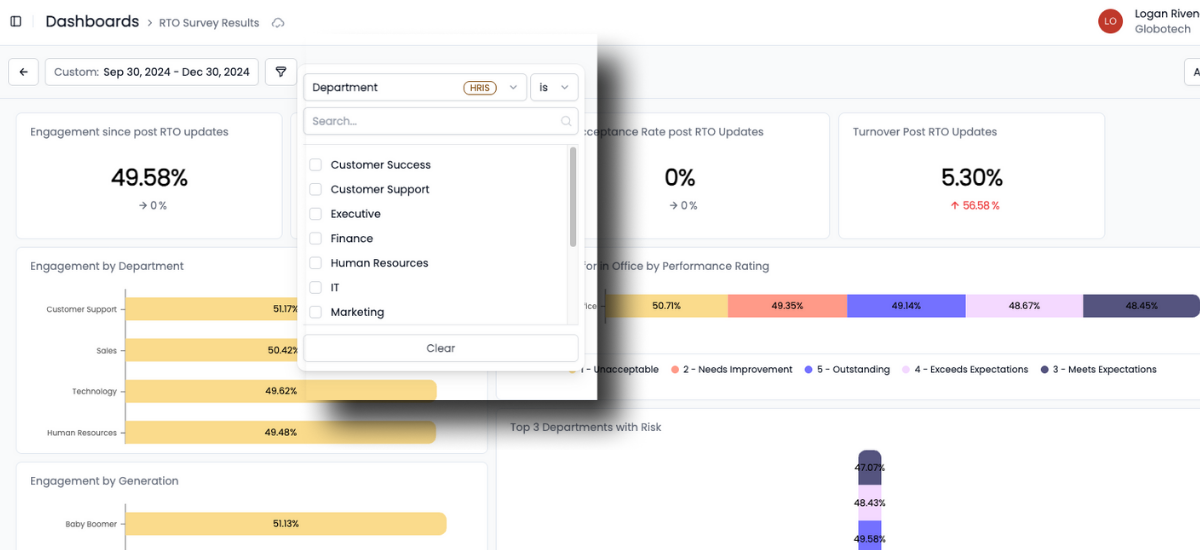
HRBench provides dedicated manager dashboards, so all people managers can review results specific to their teams.
Each dashboard includes sentiment scores, trends, and filtered hr metrics, enabling better conversations without needing a data team.
 Schedule a demo
Combine qualitative survey results with your quantitative HR metrics in one place
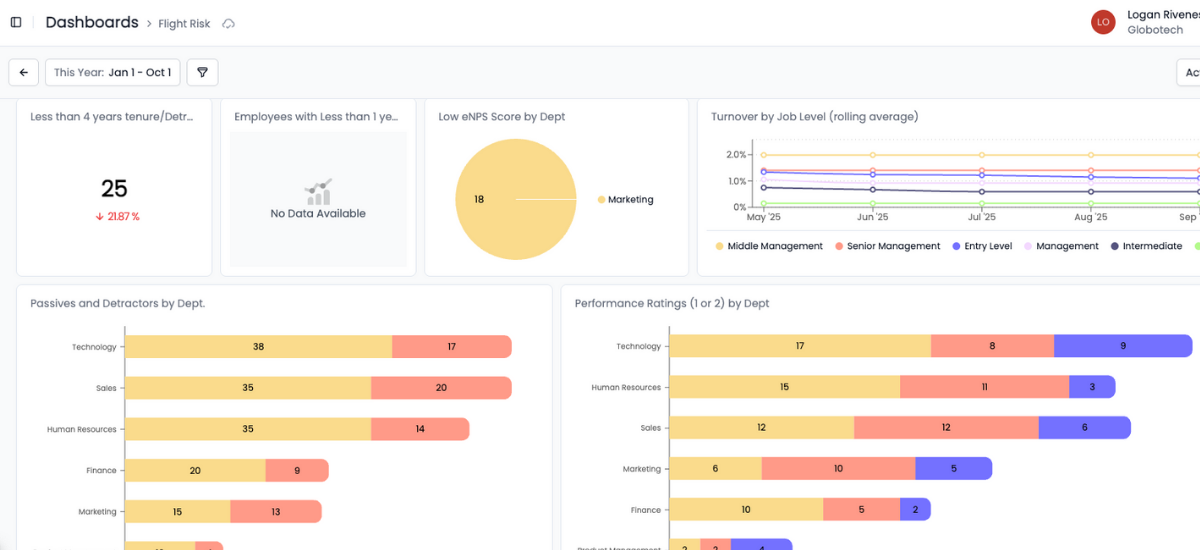
Open-ended comments and survey results are a great source of data, especially when you can combine those results into a single dashboard with your HR data and other metrics.
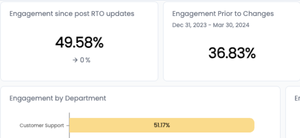
HRBench allows you to layer employee survey results onto dashboards next to metrics like span of control, turnover, or retention so you can tell the full story.
 Schedule a demo
The conversations have changed from, ‘Here’s the data,’ to ‘I see the trend and the root cause.
.png)
Of my vendors, HRBench is the top of my list. We held onto trailing data from our prior system and integrated it seamlessly. Our team had to do zero lift.

“HRBench gave us confidence. We weren’t spending hours building dashboards anymore. We could focus on strategy, not reporting.”
.jpg)
Frequently Asked Questions
If you don't find the information you're looking for, please don't hesitate to contact us directly, and our team will be happy to assist you.
HRBench supports eNPS surveys, pulse surveys, full engagement surveys, and exit interviews. You can use pre-built templates from a growing library or build fully custom surveys with your own language, structure, timing, and frequency. All survey types are included for every HRBench customer.
Yes. HRBench lets you layer employee survey results onto dashboards alongside quantitative HR metrics like turnover, span of control, retention, and internal mobility. Open-ended comments and sentiment scores appear in the same view as your workforce data so you can tell the full story without switching between tools.
Yes. HRBench provides dedicated manager dashboards so people managers can review results specific to their teams. Each dashboard includes sentiment scores, trends, and filtered HR metrics, enabling better conversations without needing a data team to pull reports.
Yes. HRBench tracks sentiment trends over time and lets you filter by team, tenure, location, role, and more. You can see how engagement changes across the employee lifecycle and understand how it connects to turnover, burnout, or performance quarter over quarter.
Engagement surveys are included for every HRBench customer at no additional cost. This includes eNPS, pulse surveys, full engagement surveys, and exit interviews. There are no separate SKUs or add-on fees for survey functionality.
Standalone survey tools collect engagement data but keep it separate from your workforce analytics. HRBench integrates survey results directly alongside 45+ auto-calculated HR metrics, benchmarks, predictive analytics, and org charts. You can correlate engagement scores with turnover data, layer sentiment onto dashboards, and give managers filtered views of both survey results and team metrics in a single platform.
See your workforce data in 20 minutes
Book a personalized walkthrough and get a custom benchmark report built from your own headcount, turnover, and cost data. You'll leave the call knowing exactly what HRBench can surface from your HRIS, ATS, and engagement systems.
- A live walkthrough mapped to your company size, industry, and systems
- A custom benchmark report comparing your metrics to peer companies
- A clear view of what an HRBench rollout would look like for your team